
Ready to take charge of your schedule? Discover time management fundamentals, proven techniques, and daily routines to boost productivity, reduce stress, and unlock more time for what matters most.
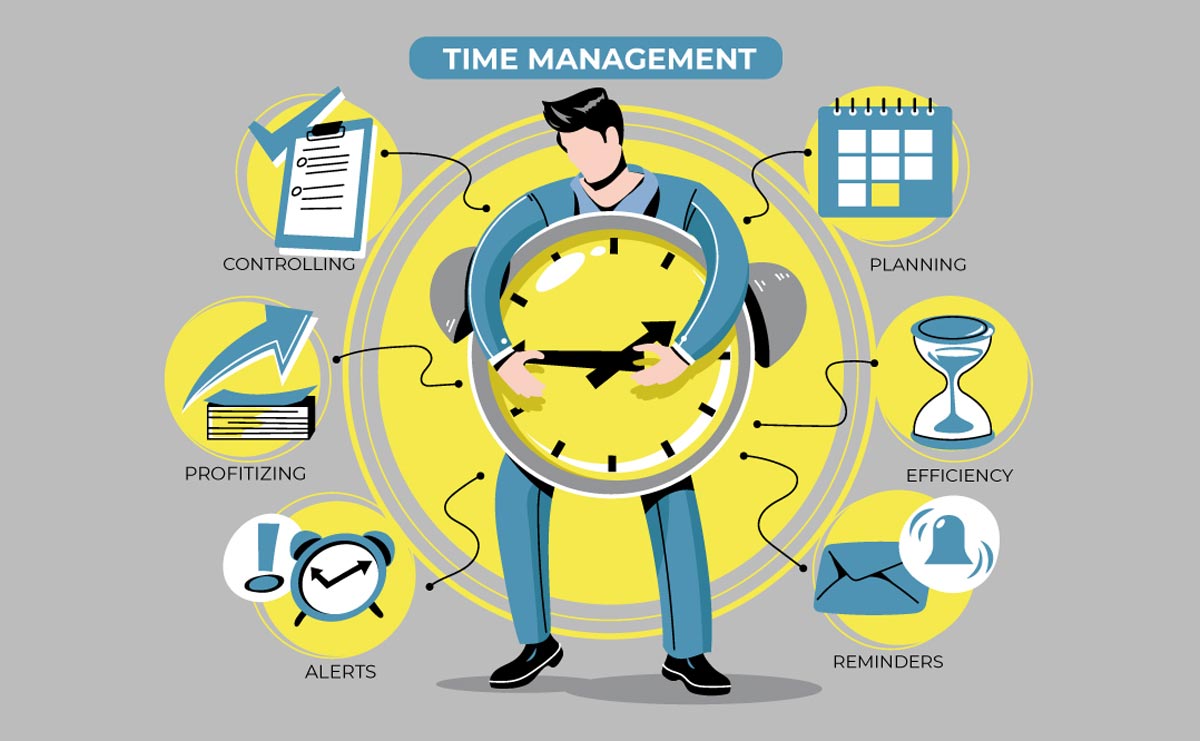
Do you ever feel like your day controls you instead of the other way around? You’re drowning in tasks, missing deadlines, and wondering where the hours disappeared. You’re not alone. Time management is the cornerstone skill that empowers you to reach goals, build meaningful habits, and maintain balance in life.
“Until you value yourself, you will not value your time. Until you value your time, you will not do anything with it.” — M. Scott Peck
In this beginner’s guide, you’ll discover how to plan, prioritize, and protect your time so you can move from overwhelmed to unstoppable.
What Is Time Management and Why Does It Matter?
Time management is the practice of planning and organizing how you divide your hours between activities. It’s not about cramming more tasks into your day—it’s about making conscious choices that align with your values and goals.
Good time management delivers:
- More accomplished with less stress
- Better work-life balance
- Increased confidence and control
- Space for what truly matters—career, health, relationships
Without these skills, you’re stuck in reactive mode, constantly firefighting instead of building the life you want.
“The key is in not spending time, but in investing it.” — Stephen R. Covey
Step 1: Audit Your Time (Know Where It Goes)
Before you can master time, you need to understand how you currently spend it. Track your activities for one full week using a journal or time-tracking app. Log everything by the hour—work, meals, commuting, social media, TV, sleep.
Ask yourself:
- What are your biggest time drains?
- When are you most productive?
- What activities don’t align with your priorities?
“Time = Life; therefore, waste your time and waste of your life, or master your time and master your life.” — Alan Lakein
Step 2: Set SMART Goals That Guide Your Time
Effective time managers don’t just stay busy—they work toward clear, meaningful objectives. Use the SMART framework to set goals that are:
- Specific
- Measurable
- Achievable
- Relevant
- Time-bound
Example: Instead of “Exercise more,” try “Walk for 30 minutes every morning at 7 AM for the next 30 days.”
“The key is not to prioritize what’s on your schedule, but to schedule your priorities.” — Stephen Covey
Step 3: Prioritize Using the Eisenhower Matrix
Not all tasks deserve equal attention. The Eisenhower Matrix helps you categorize activities by urgency and importance
| Urgent & Important | Important, Not Urgent |
|---|---|
| Do First (Crises, deadlines) | Schedule (Planning, skill-building, prevention) |
| Urgent, Not Important | Neither Urgent nor Important |
|---|---|
| Delegate or Limit (Interruptions, some emails) | Eliminate (Time wasters, endless scrolling) |
Focus energy on the “Important, Not Urgent” quadrant—this is where growth and prevention happen.
“It’s not enough to be busy, so are the ants. The question is, what are we busy about?” — Henry David Thoreau
Step 4: Master Essential Time Management Techniques
1. Time Blocking
Schedule your day in dedicated blocks, assigning specific hours to single tasks or categories (e.g., 9-11 AM: deep work, 2-3 PM: emails). This prevents multitasking and ensures important work gets protected time.
2. Pomodoro Technique
Work intensely for 25 minutes, then take a 5-minute break. After four cycles, enjoy a longer 15-30 minute break. This maintains focus and prevents mental fatigue.
3. The Two-Minute Rule
If a task takes less than two minutes, do it immediately instead of adding it to your to-do list. This prevents small tasks from accumulating.
“Give me six hours to chop down a tree and I will spend the first four sharpening the axe.” — Abraham Lincoln
Step 5: Eliminate Time Wasters
Identify and minimize low-value activities
- Digital distractions: Turn off non-essential notifications
- Perfectionism: Aim for “good enough” on non-critical tasks
- Saying yes to everything: Learn to decline requests that don’t align with priorities
- Multitasking: Focus on one task at a time for better results
“The shorter way to do many things is to only do one thing at a time.” — Mozart
Step 6: Create Systems and Routines
Build consistent daily and weekly routines that put good time management on autopilot
- Morning routine: Start each day with intention
- Weekly planning: Review goals and schedule priorities
- Evening wind-down: Reflect and prepare for tomorrow
- Regular breaks: Sustain energy throughout the day
“The secret of your future is hidden in your daily routine.” — Mike Murdock
Sample Beginner’s Daily Template
| Time | Activity |
|---|---|
| 6:30-7:00 AM | Morning routine (mindfulness, plan day) |
| 7:00-9:00 AM | Deep work/most important task |
| 9:00-9:15 AM | Break, review priorities |
| 9:15-11:00 AM | Focused work block |
| 11:00-11:15 AM | Movement break |
| 11:15-1:00 PM | Complete major tasks, handle emails |
| 1:00-2:00 PM | Lunch and recharge |
| 2:00-5:00 PM | Meetings, admin, lighter work |
| 5:00-6:00 PM | Exercise/personal time |
| 6:30 PM+ | Family, hobbies, relaxation |
Step 7: Review and Adjust Regularly
Great time managers continuously refine their approach. Each week, ask
- What worked well?
- Where did I lose time?
- What can I adjust for next week?
- Are my current priorities still aligned with my goals?
“Most people overestimate what they can accomplish in a year—and underestimate what they can achieve in a decade!” — Anthony Robbins
Quick Time Management Wins for Immediate Results
- Plan tomorrow tonight: End each day by identifying three priority tasks for tomorrow
- Use the “one-touch rule”: When you pick up a task, complete it rather than setting it aside
- Batch similar activities: Group emails, calls, or errands together
- Set artificial deadlines: Create urgency for non-urgent but important tasks
“You may delay, but time will not.” — Benjamin Franklin